


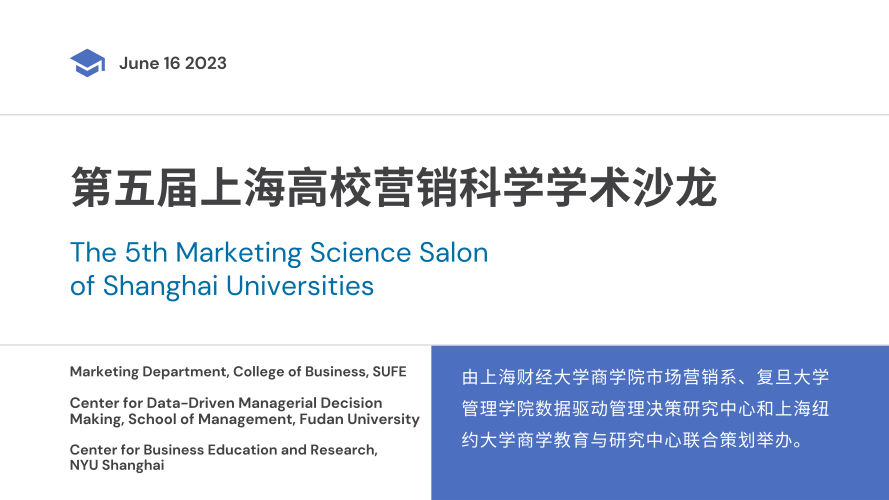
In June, the campus of Shanghai University of Finance and Economics (SUFE) is full of lush greenery, accompanied by gentle summer breezes. On the morning of June 16, the business school of SUFE was much livelier than usual. More than 60 scholars and doctoral students attended the 5th Marketing Science Academic Salon of Shanghai Universities. They came from NYU Shanghai, Shanghai University of Finance and Economics, Fudan University, Peking University, Cheung Kong Graduate School of Business, East China Normal University, Shanghai Jiao Tong University, ShanghaiTech University, Tongji University, and China Europe International Business School and other well-known business schools in China. This academic salon was jointly organized by the Center for Business Education and Research of NYU Shanghai, the Department of Marketing of Shanghai University of Finance and Economics, and the Research Center for Data-Driven Managerial Decision Making of Fudan University.
Professor Sun Qi from the Department of Marketing at SUFE hosted the salon. Professor Sun first briefly reviewed the origin and development of the academic salon, and then introduced that four professors would share their latest academic achievements as programmed.
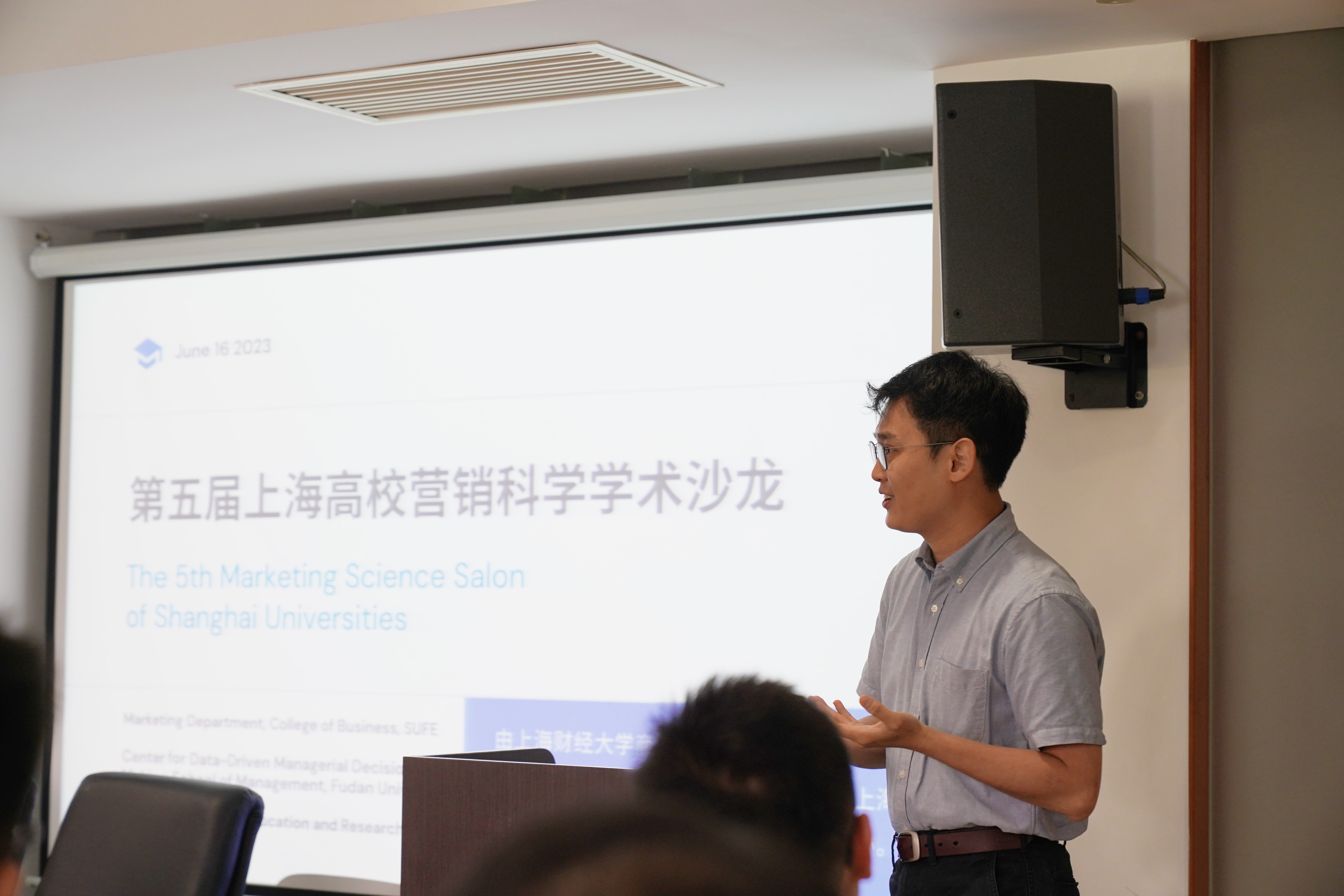
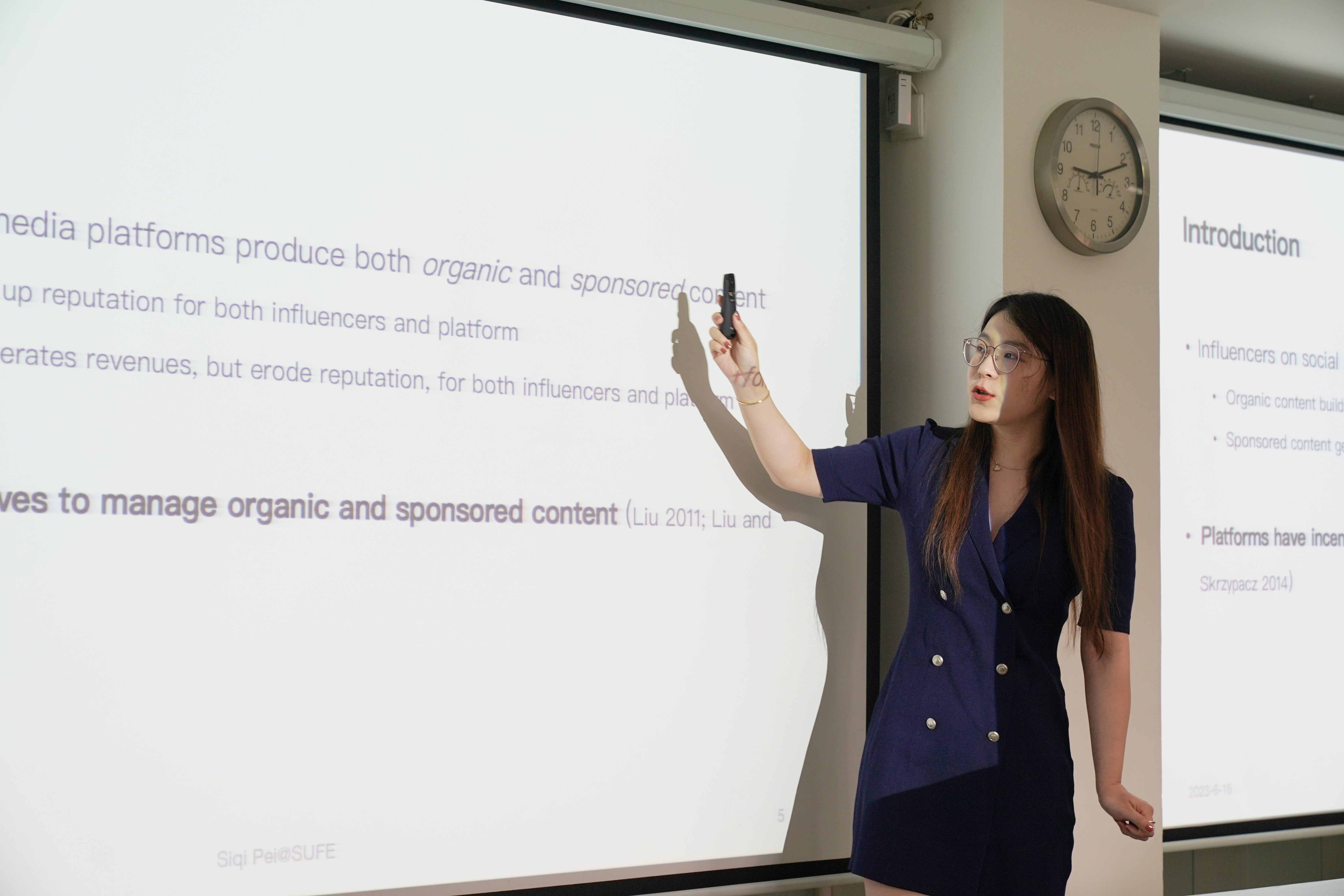
The first speaker was Professor Pei Siqi from SUFE. Professor Pei and her team found that the previous literature reviews mainly focused on the drivers of influencer marketing effectiveness, and few studies discussed "how the content management of social platforms affects influencers and audiences." Their research attempted to fill the gap. The research team explored the impact of social platforms' governing policies on whether to include direct shopping links. Focusing on a Chinese social media platform that "once banned shopping links in sponsored content", the research team conducted a natural experiment. In this experiment, they tracked nearly 1,000 "influencers" on the platform to explore two research questions: How does such a ban affect the user engagement with sponsored content? How do influencers react to the ban when it comes to the production of sponsored content? The current research findings are as follows: Under such a policy change, the user engagement with sponsored content will decrease significantly; Influencers put more effort into the production of sponsored content, such as writing longer content; The writing style of influencers has become more commercial. Professor Pei and her team suggested that social media platforms should fully consider the impact of policy changes on the content production strategy of influencers and the user engagement when formulating policies, in order to maximize the effectiveness of influencer marketing and reduce the adverse impact on the ecosystem of influencers.
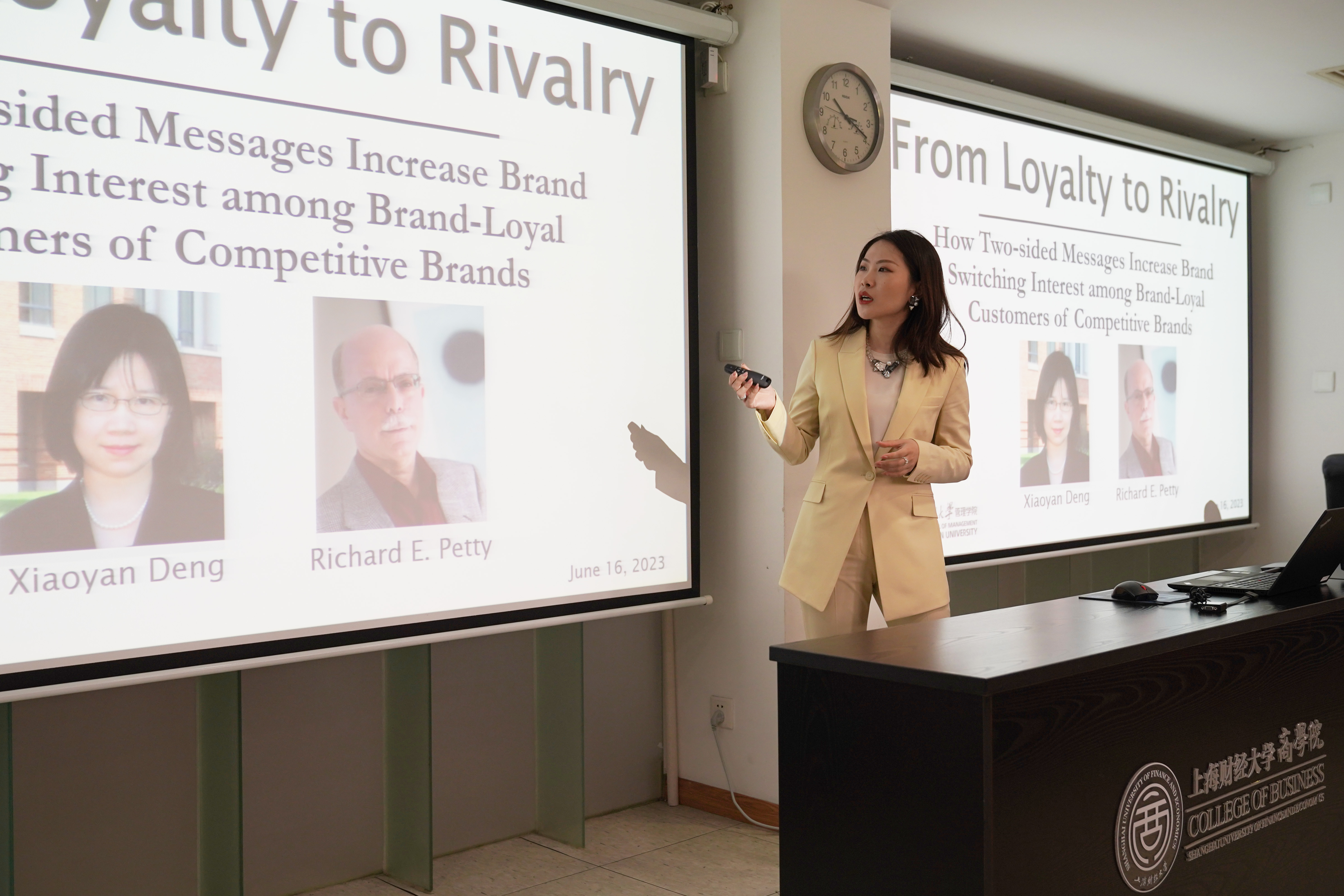
Then, Professor Xu Mengran from the School of Management of Fudan University brought her latest research on "brand switching among loyal consumers" to the audience. Professor Xu and her team found that the literature reviews on brand loyalty mainly focused on the roots of customer loyalty and commitment, and less on encouraging brand switching among loyal consumers. The research team hypothesized that two-sided messages (as opposed to one-sided messages) would be particularly effective at inducing brand switching interest among loyal consumers from competing brands. "Two-sided messages" mean that competitive brands also present some positive information about consumers' current choice of brands in sales. To specify the research, Professor Xu first explained the relationship between brand loyalty and attitude strength, the cost of brand switching, the difference between two-sided messages and one-sided messages, and the affirmation mechanism. Then she introduced four related experiments that the research team had done. All the final results of the experiments supported the previous hypothesis. The current research findings not only enrich the literature reviews on brand loyalty and consumer brand switching, especially making a unique link between brand loyalty and consumers’ self-esteem, but also provide the brands with a new perspective of consumers’ communication strategies.
Finally, Professor Chen Yuxin from NYU Shanghai and Professor Lei Ying from Peking University shared their research on "the interaction of customer reviews and price and their dual roles in conveying quality information." Professor Chen first introduced the motivation of doing this research. They observed the universality and the influence of online product reviews, and meanwhile found the bias in product reviews. Previous studies have predominantly focused on the negative side of "the review bias". This research, however, aims to discover the dynamic relationship between the reviews, the price, and the delivery of quality information, thereby providing a fresh perspective on "the review bias" for merchants and consumers. Next, Professor Lei Ying gave a detailed introduction to the research model, the findings, the theoretical contributions and the implications of the research. By employing the modeling and analysis methods, using the book market as an example, this research reveals that the review bias is conducive to conveying the correct information of product quality under certain circumstances, thus benefiting consumers: unbiased reviews can only enable consumers in the later stage to obtain quality information through reviews; However, biased reviews can promote price as a quality signal, so that consumers can correctly infer product quality information both in the early stage (before the reviews occur) and the later stage.
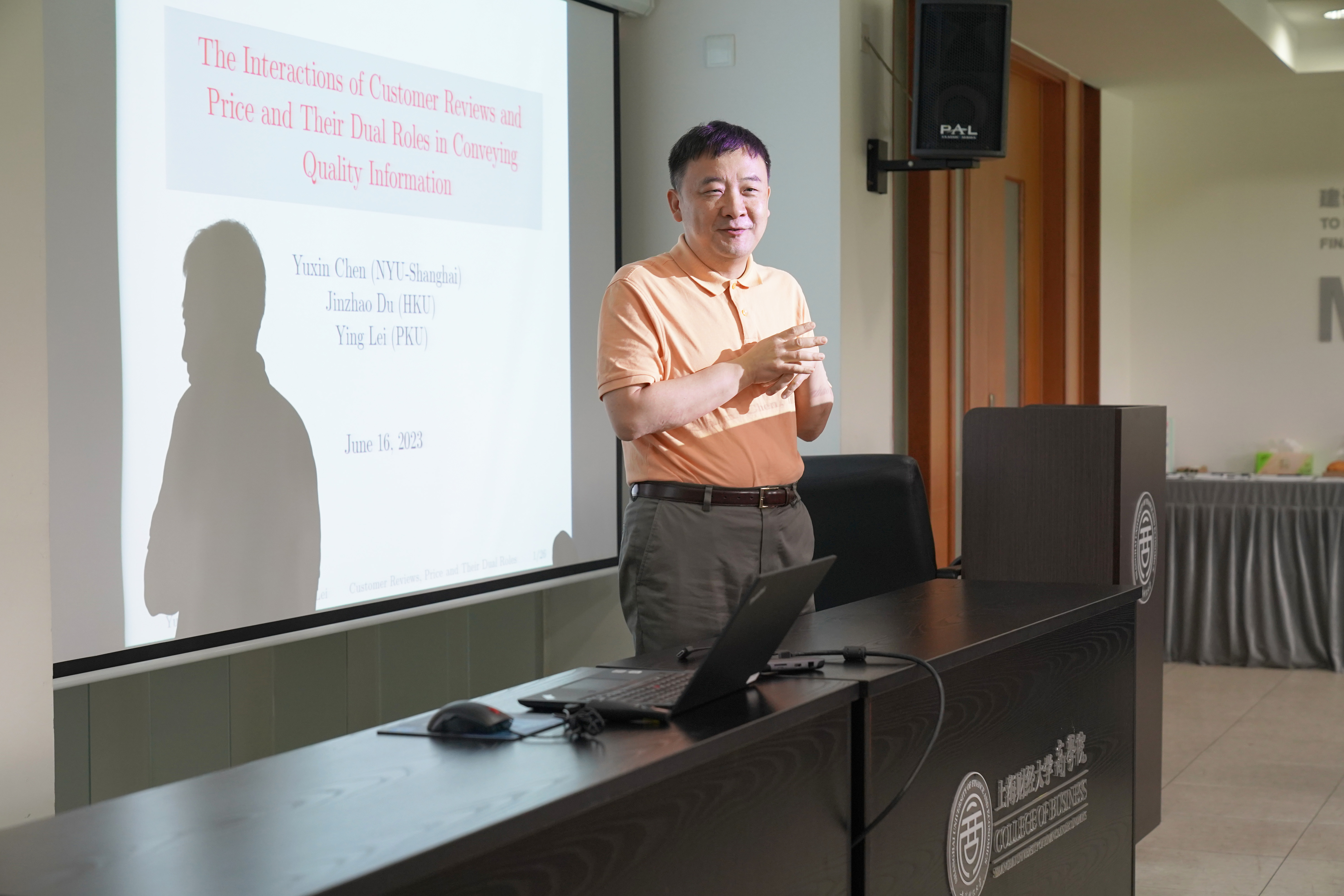

Throughout the academic salon, there was a lively and enthusiastic interaction between the speakers and the audience. The audience gained new knowledge and inspiration from the speakers' research sharing while the speakers found new ideas to improve their research from the audience's questions and comments. This reflects the important value and purpose of holding marketing science academic salons in universities. The previous four academic salons were held in NYU Shanghai, Fudan University and ShanghaiTech University. With the strong support of Professor Chen Yuxin, the Dean of Business at NYU Shanghai, and Professor Zhang Zhe from Fudan University's Department of Marketing, this academic salon has gained widespread acclaim and reputation in the field of marketing science in Shanghai. It has become a significant regular event for the exchange of marketing academic ideas and achievements in Shanghai.
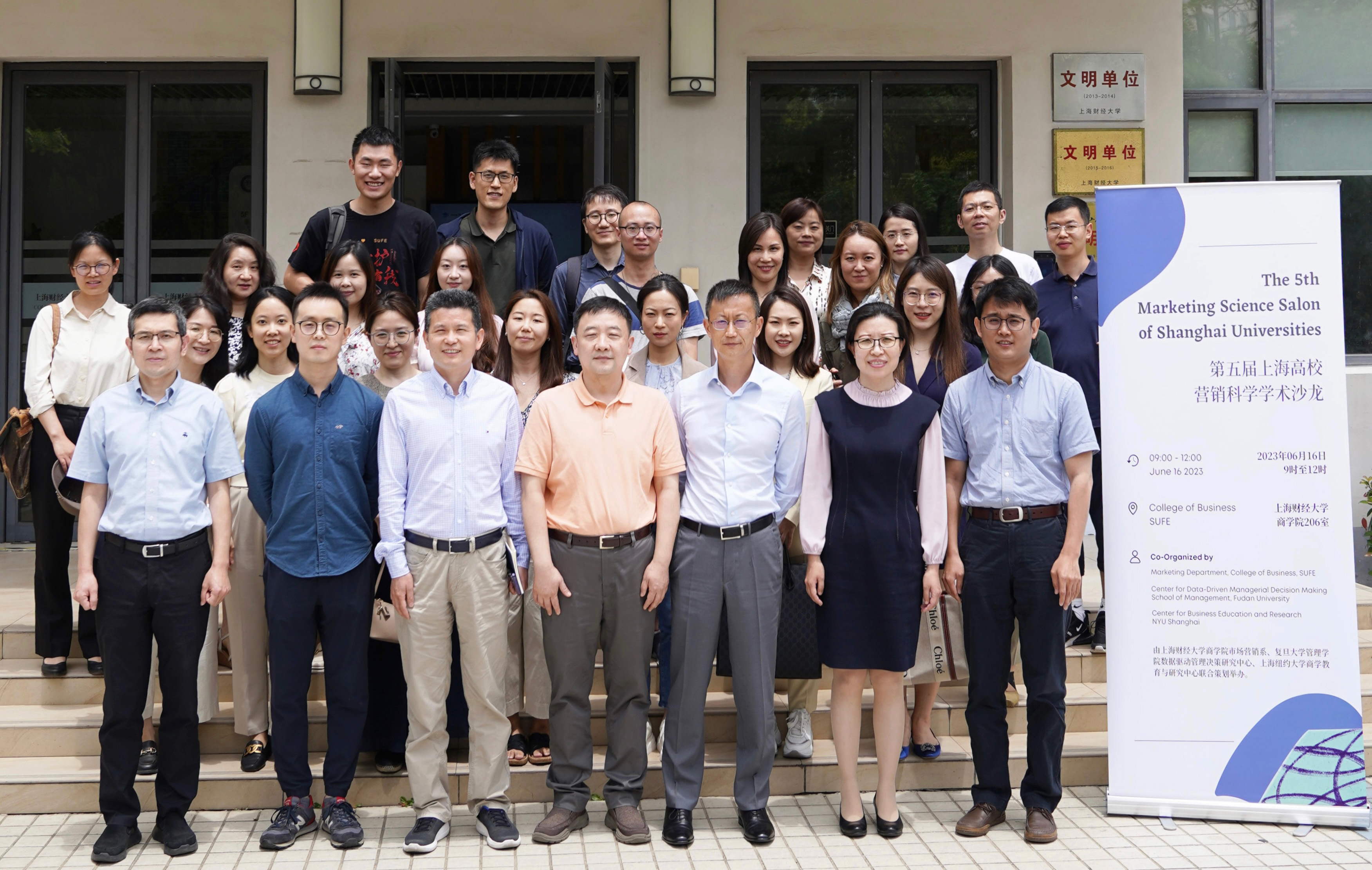
Thank you to all the speakers and participants from the following universities:
- Shanghai University of Finance and Economics
- Fudan University
- NYU Shanghai
- Peking University
- Cheung Kong Graduate School of Business
- East China Normal University
- Shanghai Jiao Tong University
- ShanghaiTech University
- Tongji University
- China Europe International Business School